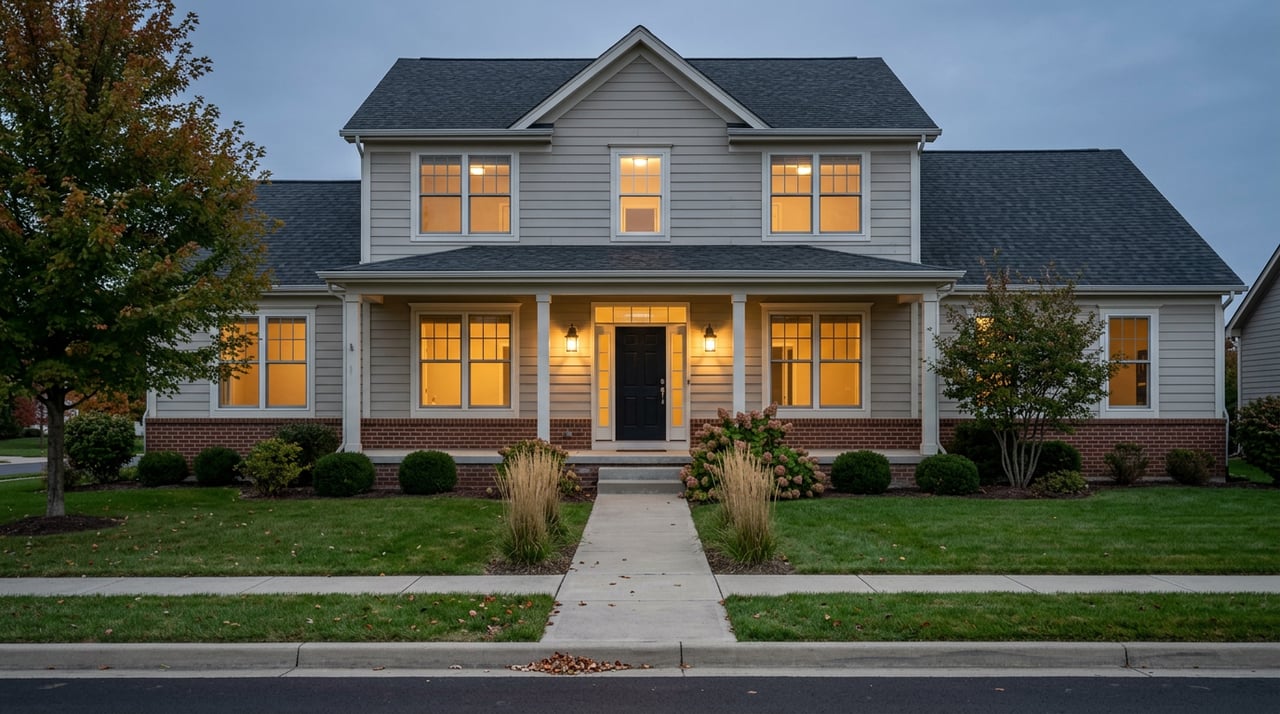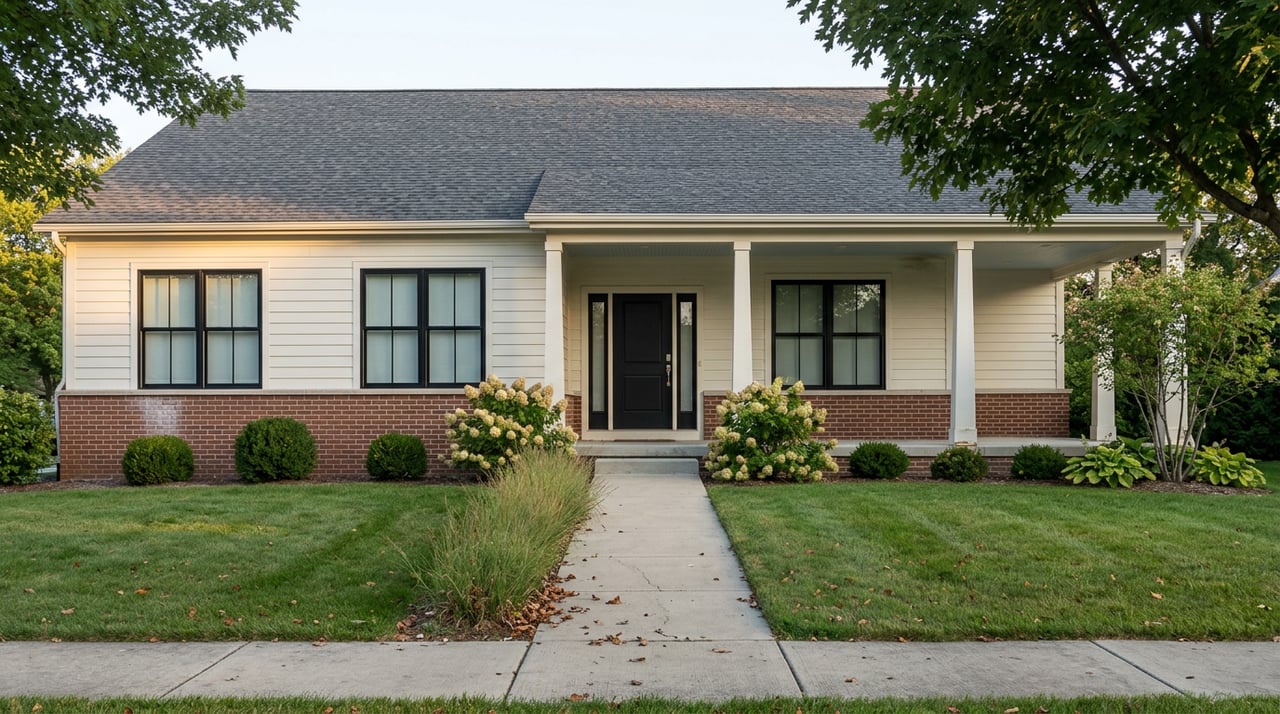
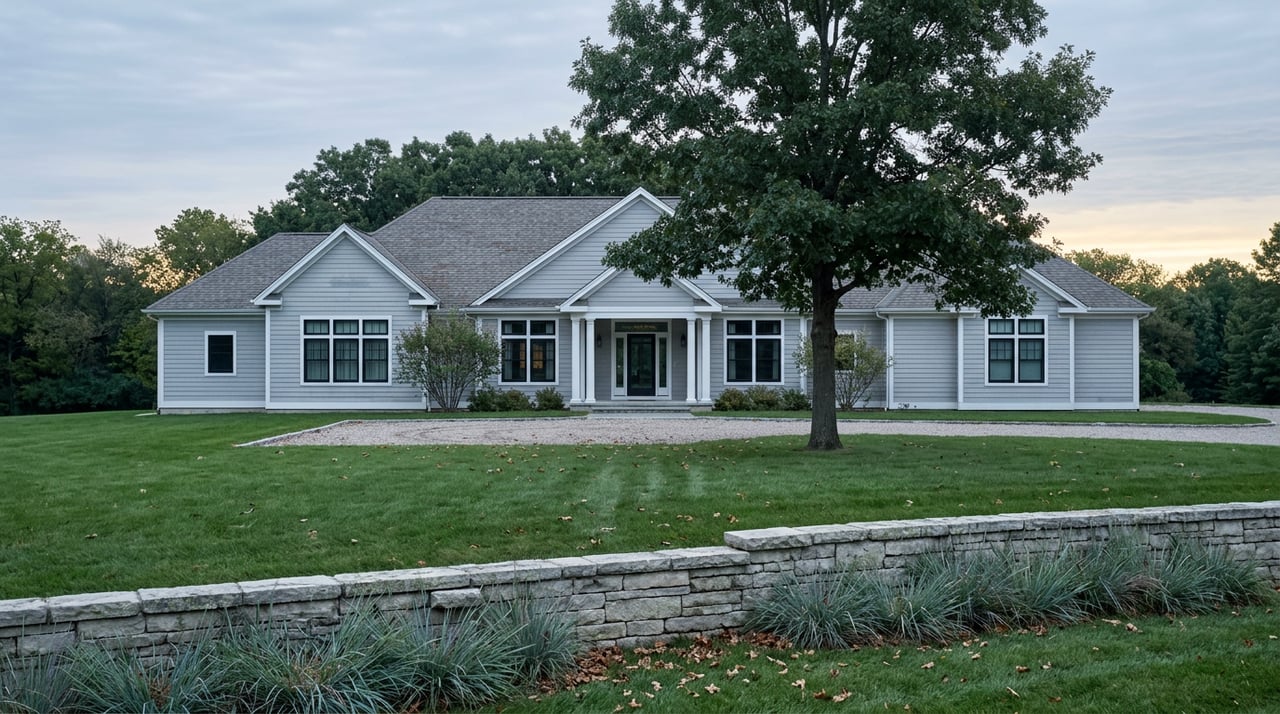
If you're comparing Wildwood to Chesterfield or Ballwin using the median sale price alone, you're comparing an average of two things that don't behave like the same product. Over the three months ending in April 2026, homes in Wildwood sold for a median of $577,000, down 4.4% from the same window a year earlier. Meanwhile, homes listed for sale in Wildwood in July 2026 carried a median asking price of $729,000. Those aren't two market snapshots taken months apart telling contradictory stories. They're two different inventories, and the gap between them is the whole point.
Active listings in Wildwood this year have ranged from $42,500 to just under $4 million. That kind of spread doesn't happen because a suburb is inconsistent. It happens because a suburb is legally two suburbs, and the line between them runs through a sewer pipe most buyers never think to ask about until they're already under contract.
The Line Is Called NU, and It Isn't Subtle Once You Know to Look
Wildwood's zoning code carves out a district called Nonurban Residential, or NU. Under that district's rules, most permitted land uses have to sit on tracts of at least five acres, and the city won't approve a new lot smaller than one acre no matter how the parcel gets subdivided. That single ordinance is why you'll find current Wildwood listings for custom homes on 3-plus-acre parcels in developments like Black Bear Ridge Estates and Hencken Valley Estates, or building lots in Timbers at Fox Mountain and Ridge Road Farms, sitting a few miles from 1970s ranch houses on quarter-acre lots near the Town Center.
The acreage side of that split usually means well water and a private septic system rather than a connection to Missouri American Water and MSD Project Clear, the two utilities that serve the city's more developed subdivisions. Wildwood's own FAQ page tells residents to contact MSD Project Clear directly for sewer issues, because the city itself doesn't manage those utility records. That's a small administrative detail, but it reflects something bigger: large stretches of the city, particularly toward the west, were built and zoned around the assumption that homeowners would handle their own water and wastewater, not tap into a municipal system.
What Happened When a Builder Tried to Skip the Sewer Line
You can see this exact tension play out in a real proposal the city reviewed. In June 2025, an engineer representing a Lombardo Homes development team brought a concept to Wildwood's Development and Zoning Review Committee for 16 lots on roughly 55 acres, with individual lots sized around 3.4 acres. The developer wanted to use private septic systems for each lot rather than the centralized sewer system the city typically requires for a development of that size in the NU district.
City staff flagged the conflict immediately. Committee members raised concerns about clustering that many septic fields close to a creek, and the developer's team said they'd need to run soil tests to figure out whether the ground could even support that many septic fields at once. The project also needed a water main extension of about 4,000 feet from Missouri American Water just to bring potable water to the site. None of that is unusual for large-lot Wildwood development. It's the normal cost of building on the west side of a sewer line that mostly stops at the developed core.
If you're touring a 3-acre lot in Wildwood and it feels like the middle of nowhere despite being 25 minutes from Clayton, that's not an accident of geography. It's zoning working exactly as written.
The Loan Program You Pick Decides How Your Closing Timeline Goes
Here's where this stops being a zoning curiosity and starts affecting your actual closing date. Well and septic properties get treated very differently depending on how you finance the purchase.
| Loan type | Well/septic inspection requirement | What it means for you |
|---|---|---|
| Conventional | Only required if an appraiser or inspector flags a visible problem | The most forgiving path; often no extra step at all |
| FHA | Mandatory water test and septic certification from the local health authority, plus minimum distance rules (well at least 50 feet from the septic tank, 75 to 100 feet from the drain field) | Water test results are generally valid around 90 days, so timing matters if your closing slips |
| VA | Mandatory water test for coliform bacteria; septic inspection required if the appraiser or soil conditions suggest an issue | Missouri VA buyers should expect these inspections to add $300 to $600 in closing costs and a week or more to the timeline if remediation is needed |
| USDA | Not applicable in Wildwood | St. Louis County is roughly 99.7% outside USDA's eligible loan area, and Wildwood sits within that ineligible zone |
That last row surprises a lot of buyers. A 3-acre wooded lot with a well and septic system looks and feels like the kind of rural property USDA's zero-down loan program was built for. But USDA eligibility isn't based on lot size or utility type. It's based on how the U.S. Department of Agriculture classifies the surrounding area, and St. Louis County as a whole falls almost entirely outside that boundary. So the acreage buyer who assumed a rural-style loan program would be available to them needs a different plan from day one, not a surprise at underwriting.
If you're financing with FHA or VA on the west side of Wildwood, budget for the well and septic inspection as a real line item, not an afterthought. Order it early in your due diligence window rather than waiting for it to surface as a closing condition. A failed or borderline septic system found late in the process is a much harder negotiation than one found in week one.
Two Practical Rules Before You Fall in Love With Acreage
A few things worth confirming before you write an offer on a Wildwood property with more than an acre of land:
- Ask directly whether the home is on MSD sewer or private septic, and if it's septic, ask when the system was last inspected and pumped. The EPA generally recommends septic inspection and pumping every 3 to 5 years, and that maintenance history tells you more about future cost than the listing photos do.
- Confirm your loan program's inspection requirements with your lender before you're under contract, not after. A conventional loan and an FHA loan can produce very different closing timelines on the exact same house.
This isn't a reason to avoid Wildwood's acreage inventory. Some of the most distinctive properties in west St. Louis County sit on those large NU-zoned lots, from wooded cul-de-sac parcels near Glencoe to gated communities like The Reserve at Wildwood being built out by McKelvey Homes. It's a reason to walk in with your eyes open about which Wildwood you're actually shopping for.
A Few Questions We Hear From Wildwood Buyers
Is every home on the west side of Wildwood on well and septic? Not every one, but it's common enough that you should never assume public utilities on a large lot. Confirm it in writing during your inspection period rather than assuming based on the neighborhood name or builder.
Does a septic system make a home harder to sell later? Not inherently. It does narrow your buyer pool slightly, since FHA and VA buyers face a mandatory inspection step that conventional buyers don't. A well-maintained system with clean recent inspection records removes most of that friction.
Can new construction in Wildwood still end up on septic? Yes. The Lombardo Homes proposal reviewed by the city in 2025 is a direct example of a builder requesting individual septic systems for a new subdivision rather than connecting to centralized sewer, specifically because of the NU district's large-lot requirements.
Wildwood's price tag on a portal search tells you almost nothing about which of these two markets you're looking at. The zoning code, the utility provider, and your loan officer's inspection checklist tell you everything. If you're comparing Wildwood against Chesterfield, Ballwin, or another west county suburb and want to know which side of that sewer line fits your budget and your financing, Chris & Kait Real Estate Team walks this exact terrain with buyers every week. Reach out and we'll help you figure out which Wildwood you're actually buying into, or get your instant home valuation if you're the one selling on either side of that line.